
Couplet #1شعر ۱
دیارِ عشق میں اپنا مقام پیدا کر
نیا زمانہ نئے صبح و شام پیدا کر
Diyar-e-ishq mein apna maqam paida kar
Naya zamana naye subah-o-shaam paida kar
Complete GHAZAL with English Translation, Roman Urdu & Tashreeh
علامہ اقبال کی یہ غزل ان کے مجموعے 'بالِ جبریل' (1935ء) کی سب سے زیادہ ولولہ انگیز اور فکری طور پر بیدار کرنے والی غزل ہے۔ اقبال انسان کو غلامانہ ذہنیت، تقلیدِ کورانہ اور دوسروں کی محتاجی سے نکال کر اپنی خودی کو بیدار کرنے کی دعوت دیتے ہیں۔ وہ فرماتے ہیں کہ زندگی خود کو بنانے، نیا زمانہ اور نئی صبح و شام پیدا کرنے کا نام ہے۔
A magnificent motivational ghazal from Allama Iqbal's 1935 magnum opus 'Bal-e-Jibril'. Iqbal calls upon the youth to transcend imitation and dependency, urging every individual to carve out their own sovereign realm in the domain of Love, to forge new dawns and twilights, and to awaken the divine spark of self-determination.
دیارِ عشق میں اپنا مقام پیدا کر
نیا زمانہ نئے صبح و شام پیدا کر
Diyar-e-ishq mein apna maqam paida kar
Naya zamana naye subah-o-shaam paida kar
خدا اگر دلِ فطرت شناس دے تجھ کو
سکوتِ لالہ و گل سے کلام پیدا کر
Khuda agar dil-e-fitrat shanaas de tujhko
Sukoot-e-lala-o-gul se kalaam paida kar
اٹھا نہ شیشہ گروں کے احسان اے
سفالِ ہند سے مینا و جام پیدا کر
Utha na sheeshagaron ke ehsaan ae saqi
Sifaal-e-Hind se meena-o-jaam paida kar
میں شاخِ تاک ہوں میری غزل ہے میرا ثمر
مرے ثمر سے مئے لالہ فام پیدا کر
Main shaakh-e-taak hun meri ghazal hai mera samar
Mere samar se mai-e-lala faam paida kar
مرا طریق امیری نہیں فقیری ہے
نہ بیچ غریبی میں نام پیدا کر
Mera tareeq ameeri nahin faqiri hai
Khudi na bech ghareebi mein naam paida kar
Diyar-e-ishq mein apna maqam paida kar
Naya zamana naye subah-o-shaam paida kar

Khuda agar dil-e-fitrat shanaas de tujhko
Sukoot-e-lala-o-gul se kalaam paida kar

Utha na sheeshagaron ke ehsaan ae saqi
Sifaal-e-Hind se meena-o-jaam paida kar

Main shaakh-e-taak hun meri ghazal hai mera samar
Mere samar se mai-e-lala faam paida kar

Mera tareeq ameeri nahin faqiri hai
Khudi na bech ghareebi mein naam paida kar
In the sacred realm of Love, carve out a sovereign station of your own! Forge a new epoch, create new dawns and new twilights of your own! If God blesses you with a heart attuned to Nature's inner secrets, Draw forth eloquent speech from the deep silence of the tulip and the rose! Do not incur the patronizing favors of foreign glassblowers, O Saqi; Fashion your own wine flagon and goblet from the humble clay of Hind! I am the fruitful grapevine, and my inspired verse is my sweet fruit; From my harvest, distill the ruby-red wine of spiritual passion! My path is not the ostentatious wealth of kings, but the noble simplicity of dervishes; Never barter away your Selfhood—achieve an immortal name even in poverty!
An anthem of spiritual and cultural self-reliance. Iqbal instructs humankind to create their own tools rather than relying on external patrons, warning against selling one's soul ('Khudi') for material comfort.
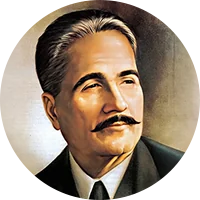
"Diyar-e-Ishq Mein Apna Maqam Paida Kar (Complete Ghazal)" (دیارِ عشق میں اپنا مقام پیدا کر (مکمل غزل)) was composed by Sir Allama Muhammad Iqbal (علامہ اقبال). It is a classical ghazal celebrated in Urdu literature for its artistic excellence and emotional depth.
An anthem of spiritual and cultural self-reliance. Iqbal instructs humankind to create their own tools rather than relying on external patrons, warning against selling one's soul ('Khudi') for material comfort.
Yes, Poetry in Urdu provides complete dual-script access: authentic Nastaliq Urdu calligraphy, line-by-line Roman Urdu transliteration for diaspora readers, English translation, and a difficult vocabulary glossary (Lafz-Nama).
Sir Allama Muhammad Iqbal (1877–1938) was a towering philosopher-poet, scholar, and politician in British India, widely revered as the spiritual founder of Pakistan (Mufakkir-e-Pakistan) and Shair-e-Mashriq (Poet of the East).
View Complete Profile & KalamMore verified works to explore